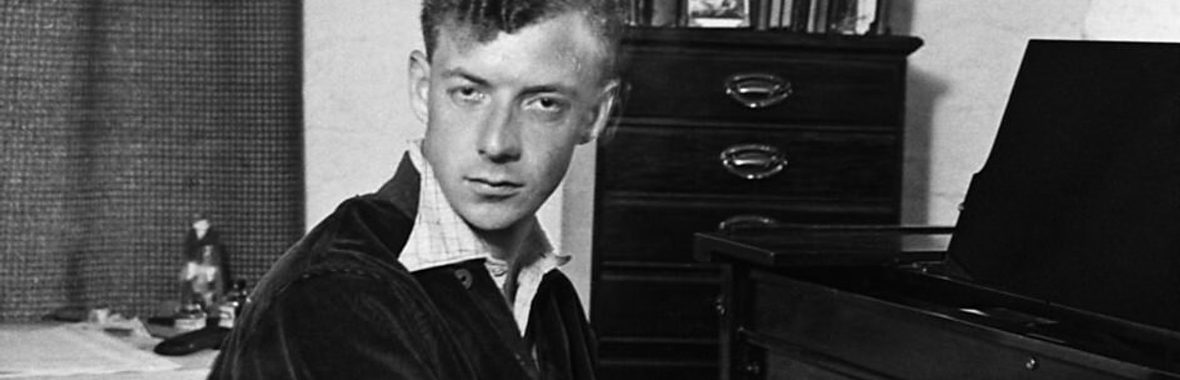
Fifty years after his death, Dr Lucy Walker considers the remarkable staying power of Britten’s music – and of his fascinating life story.
In the five decades since Benjamin Britten died, he has become one of the most thoroughly examined, researched, celebrated and investigated composers of the twentieth century. Three major biographies have emerged since 1976 – two of them in the composer’s centenary year of 2013 – as well as shorter biographical studies, six volumes of his correspondence, selections from his diaries, and the collected letters between Britten and his partner, Peter Pears. Alongside all of this are two pictorial accounts (Pictures from a Life and Britten in Pictures), and volumes of academic essays exploring his music from multiple perspectives.
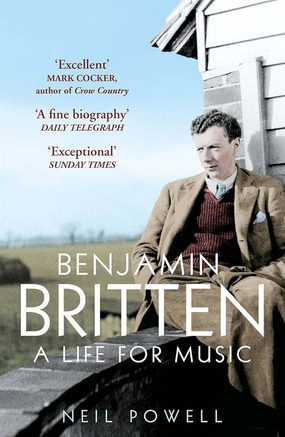
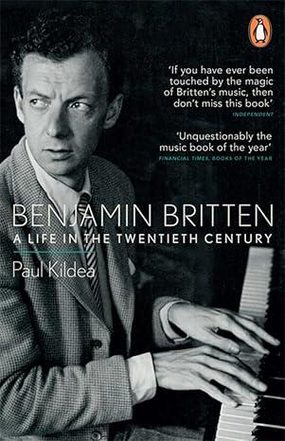
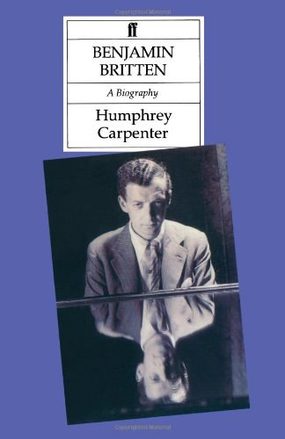

There have also been documentary films, plays, radio programmes, recordings of obscure corners of his catalogue, and considerable web resources, including a series of over 50 short films on his musical works. His final home, The Red House in Suffolk, is now a visitor attraction where the story of his domestic life is told, and the Archive houses his vast collection of papers, from music manuscripts to correspondence to receipts for his Christmas drinks orders. To mark the anniversary of his death, throughout 2026 we will be looking back, once again, at Britten. But – given all this – what more is there to say?
Firstly, this is a question one might reasonably ask about any prominent composer whose life and music have been scrutinised in detail and who are still celebrated in certain important years; for example Beethoven, whose 200 year anniversary will be marked next year, or Stravinsky who was celebrated at the 50th anniversary of his death in 2021. Put simply, the more a composer recedes into history, the more the people who write about that composer continue into the future, with all their preoccupations and interests and intersections with contemporary ideas – or there might be a tantalising new discovery. In Britten’s case there is not only the fact that performers, writers and potential new audiences for his music are emerging every year, but the further prospect that, despite the already impressive levels of item-level description in the Archive, there are still boxes of papers to be explored; still avenues of his life to be uncovered.
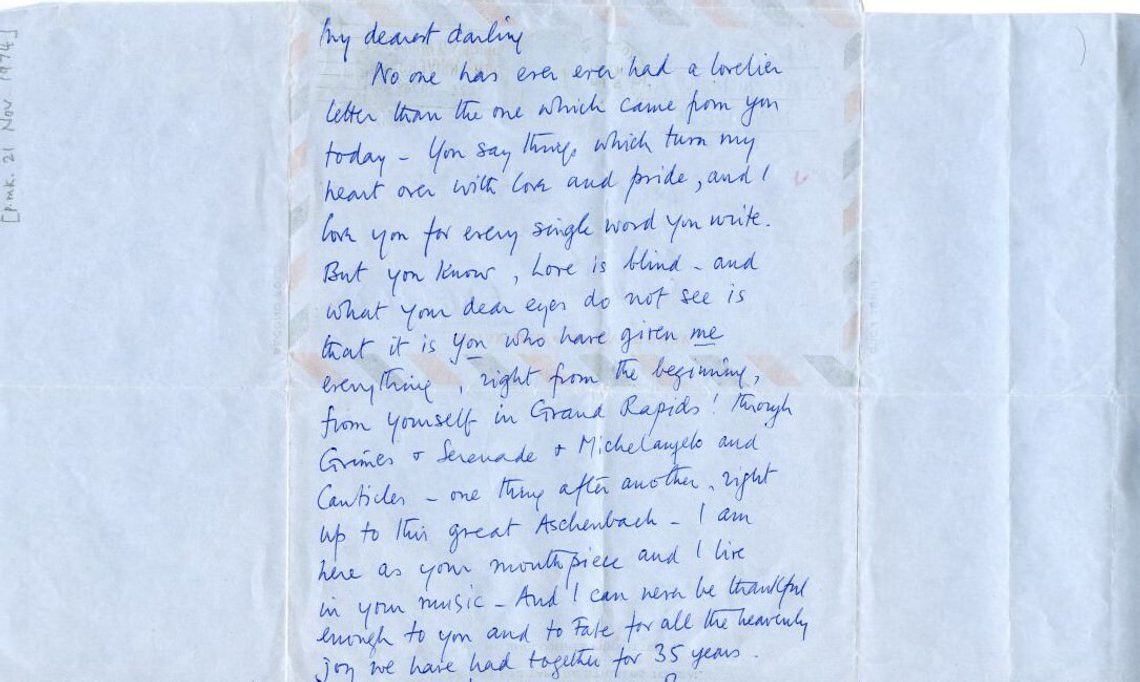
Letter from Peter Pears to Benjamin Britten, undated.
©The Red House Archive, Britten Pears ArtsIn terms of Britten’s life story, one aspect that continues to be explored, both within and beyond the world of classical music, is that of his status as a figure in LGBTQ+ history. While hardly ignored in the earlier biographies, there has been an exponential increase in interest in this aspect of Britten’s life, both inside and outside the world of classical music, in relation to gay rights, the history of discrimination and criminalisation, and the comparisons between earlier historical eras and our own.
In 2014, LGBT+ History Month chose Britten as one of their ‘faces’ in their Schools Out project (along with Bessie Smith, Ethel Smyth and Angela Morley). Three years later in 2017 Britten Pears Arts (Britten-Pears Foundation at the time) held a year-long exhibition and series of events entitled Queer Talk marking the 50th anniversary of the partial decriminalisation of homosexuality in the 1967 Sexual Offences Act. Both exhibition and events outlined the legal and cultural climate of the time: homosexual acts were illegal, and gay men vulnerable to persecution or prosecution. The public conversation began to change only very slowly, partly as a result of the Wolfenden Report (1957), which – eventually – led to the 1967 act.
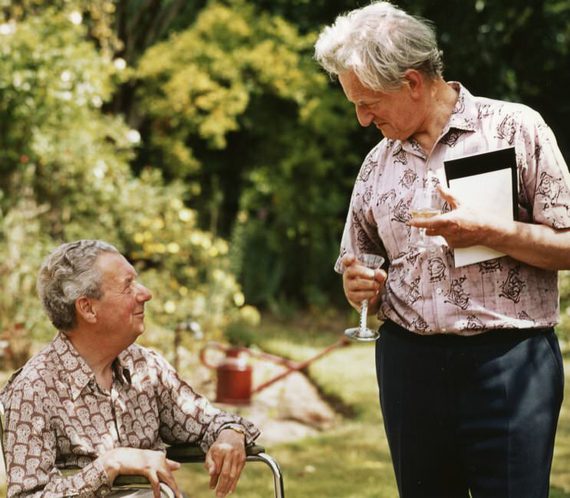
Benjamin Britten and Peter Pears at a Red House garden party in June 1976
©Nigel Luckhurst 1976The year before Queer Talk, the letters between Britten and Pears were published (My Beloved Man), which are disarmingly frank and affectionate – perhaps strikingly so given the circumstances outlined above. They suggest a kind of parallel universe, with two men who considered themselves married in all senses of the word having to maintain a professional and public secret, while addressing each other in the most intimate and loving terms. This poignant dichotomy has drawn several musicians, writers, and performers to these letters as the basis of performances. Séamus Rea and The Fourth Choir, along with speakers Zeb Soanes and Petroc Trelawney, presented an evening of choral music interspersed with the letters. Playwright Ashley M. Cowles devised a theatre piece in 2023 titled Company of Man in which Britten and Pears’ letters were presented alongside a contemporary narrative of sexual identity, and described by Cowles as a “love letter to Queer People“. Composer Conor Mitchell, in his song cycle Look Both Ways (2022) set Britten and Pears’ letters to music. Throughout the process of composing he found himself increasingly drawn to their relationship, and inspired by their defiance in the face of the law:
“how come these two men, so buttoned up and alien to empowered, liberated me, felt they could write passionate love letters to each other in a pre-Wolfenden world, knowing that each word could be used against them in court?“ (Conor Mitchell, Guardian 11 July 2022)
In terms of Britten’s own music, it might seem that his performance figures don’t need much of a boost. After Elgar – sometimes even matching the earlier composer – Britten is the most regularly performed British composer (internationally certainly) and his operas are on regular rotation in several countries at any given time. At the time of writing, there are over 140 performance of Britten listed on the classical performance website Bachtrack – and this is before many venues have launched their Britten seasons this year. They include several productions of Peter Grimes as well as airings for chamber and orchestral works, in countries including Japan, Australia, Sweden, Germany, Spain and Lithuania as well as across the UK.
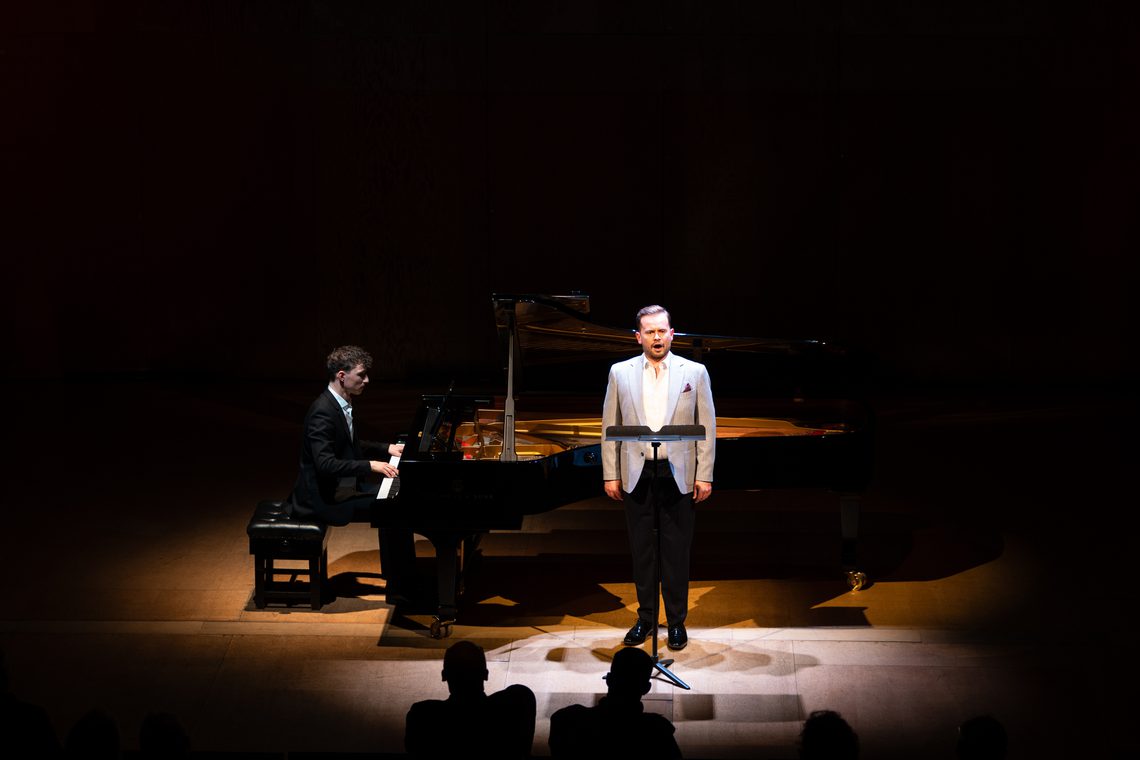
Stories as Brittle as Glass, 2025
©Britten Pears ArtsThe sheer range and depth of Britten’s catalogue lends itself, of course, to plenty of performing opportunities. But those who curate contemporary programmes, especially singers and collaborative pianists, have found in Britten’s song cycles a way of expressing more personal, even political concerns. Relating to our earlier theme, Elgan Llyr Thomas’s Unveiled included a performance of Britten’s Seven Sonnets of Michelangelo, the first cycle Britten wrote for Pears and which is overflowing with passionate sentiment; in Thomas’s recording the texts are translated from Italian to English, unveiling the literal meanings of the songs that would have been necessarily more covert at the work’s premiere in 1943. Britten’s pacificism found itself the subject of a recent Britten Pears Arts recital, Stories as Brittle as Glass, where his 1969 cycle Who Are These Children was a kind of framing device, a means through which to explore the horrors of war through other vocal works of the twentieth and twenty-first centuries. I have myself written elsewhere of the existential quality of some of Britten’s bleakest musical statements or portrayals; the violence of Peter Grimes, for example. Or more specifically what Søren Kierkegaard has called the “anguish of Abraham“: the choices people make which result in horrific consequences, but which can be unthinkingly justified by adherence to some ideology or other, and which is dramatically played out in Britten’s War Requiem. These are questions which remain just as powerful today.
Throughout the anniversary year, I shall be drawing attention to those works of Britten which may have some broad contemporary relevance. But even more widely, there is the opportunity to introduce Britten’s music to those who have not yet encountered it, purely for the experience of sharing something beautiful, something fascinating, and something which might find a response in a new group of listeners. When I worked at The Red House, Britten’s final home, I sometimes encountered the view from visitors that – while they enjoyed visiting his house, they weren’t keen on his music! During the year I will post suggested playlists, and introductions to several pieces, as well as inviting performers and concert programmers to discuss their favourite works by Britten.
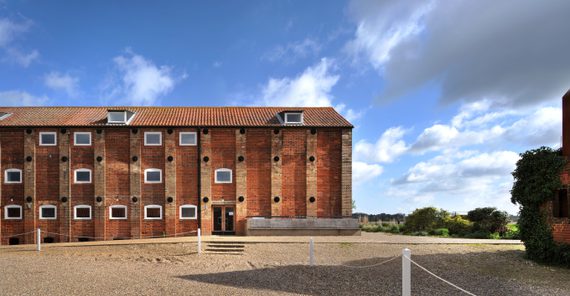
Britten Pears Building, Snape Maltings
And it is not only Britten’s life and music which is worth considering in terms of his significance today. As well as being a composer and performer, Britten was an Aldeburgh Festival administrator and – with Pears – established an artist training programme at Snape Maltings, both of which still run today. Britten’s own music will be featured at this year’s Festival, marking the 50th anniversary of the 1976 Festival, which was Britten’s last, but also is a striking example of his legacy in action.
Across the Festival programme are examples not only of artist support, but the spirit of artistic collaboration, which was something Britten and Pears both embodied themselves and fervently wished would continue after their deaths.
To answer my own question, then, there is doubtless a great deal more to say about Britten: about his own history, how audiences and performers respond to his music today, and what effect his artistic legacy will have in years to come. As we continue through 2026, there will be articles, podcasts, and many other ways of exploring all this – and much more. Keep an eye out for Britten 26 content: and join in this fascinating conversation.
Lucy Walker is Public Engagement Associate for Britten Pears Arts in 2026.
Find out more about Britten’s legacy in Remembering Britten.
Read next
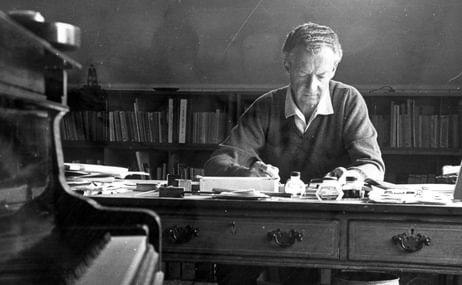
Inside Benjamin Britten’s creative process: A film by Emily Richardson
Britten’s creative inspiration came from where he lived and worked. How did composing while walking in this particular Suffolk landscape shape the…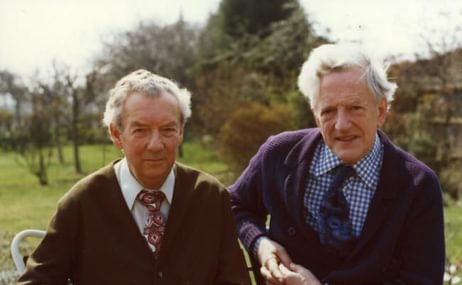
Britten & Pears
Benjamin Britten and Peter Pears were together from 1939 until Britten’s death in 1976. Yet during Britten’s lifetime, neither spoke publicly about…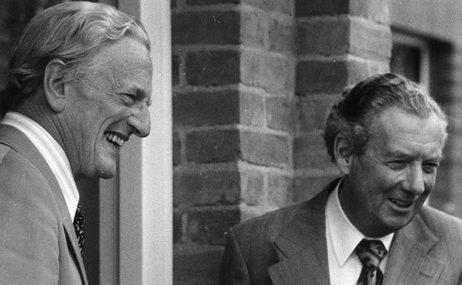
Archive Treasures: A Spiritual Home – Britten, Pears and The Red House
The former homes of famous people are referred to, variously, as house museums or personality houses. They are effectively physical biographies,…